

Summer arrives with longer days, golden evenings, and a little more time to enjoy the outdoors. Happy Summer Solstice is a beautiful way to welcome this special turning point of the year. The summer solstice marks the longest day and shortest night in the Northern Hemisphere, making it a perfect moment to pause, celebrate, and appreciate nature’s changing rhythm.
Whether you watch the sunrise, enjoy a peaceful picnic, gather with family, or simply take an evening walk, this day offers plenty of reasons to smile. From ancient summer solstice traditions to modern celebrations, the occasion carries a rich history. It also reminds us how Earth’s seasonal transition, sunlight, and daylight hours shape our year.

What Is the Summer Solstice?
The summer solstice is an astronomical event caused by Earth’s tilted axis. During the June solstice, the Northern Hemisphere leans most toward the Sun. As a result, northern regions receive their greatest amount of daylight for the year. (Time and Date)
The word “solstice” comes from Latin roots connected with the idea of the Sun standing still. The Sun doesn’t actually stop moving. Instead, its apparent northward movement reaches its yearly limit before gradually shifting southward across the sky.
What Does the Summer Solstice Mean?
For the Northern Hemisphere, the solstice marks the astronomical start of summer. For the Southern Hemisphere, the same moment begins winter. That simple contrast shows how strongly Earth’s tilt shapes our seasons. (Time and Date)
The event also has a deeper cultural meaning. Many communities have welcomed the extra sunlight with gatherings, music, fires, food, and sunrise ceremonies for centuries. Today, people still use the occasion as a natural marker for the seasonal transition.

When Is the Summer Solstice in 2026?
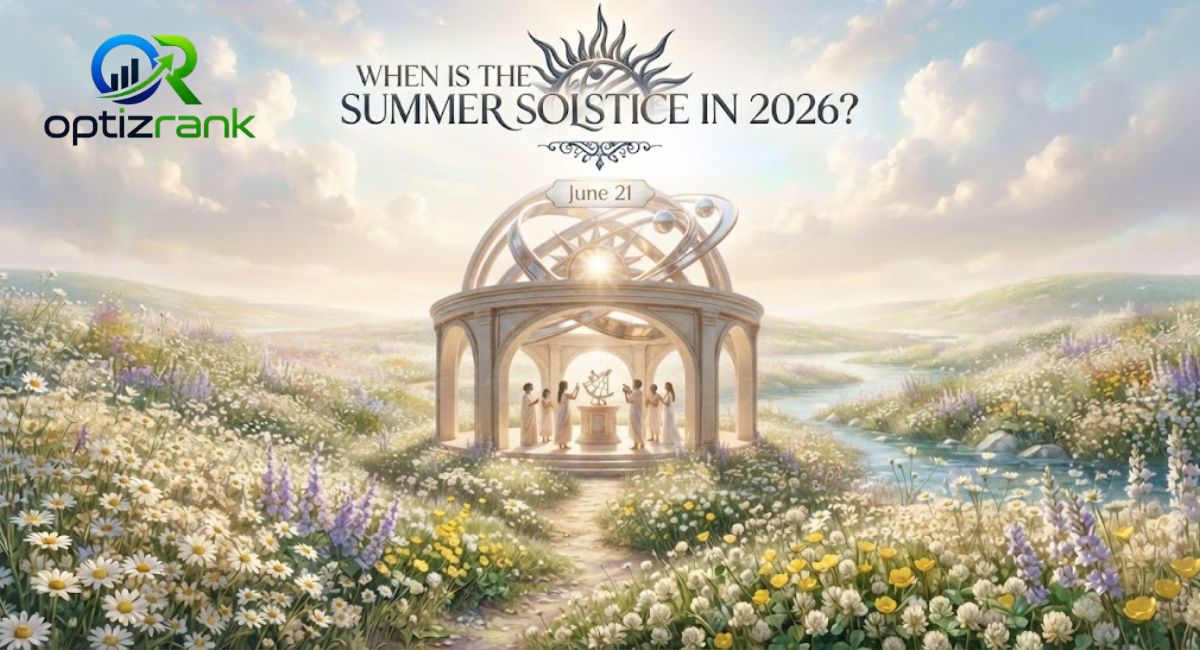
The summer solstice in 2026 occurs on Sunday, June 21, at 08:24 UTC. In the United States, that moment falls at 4:24 a.m. EDT, 3:24 a.m. CDT, 2:24 a.m. MDT, and 1:24 a.m. PDT. The U.S. Naval Observatory confirms the June 21 date and 08:24 UTC time. (US Naval Observatory)
| U.S. Time Zone | 2026 Solstice Time |
| Eastern Time | 4:24 a.m. EDT |
| Central Time | 3:24 a.m. CDT |
| Mountain Time | 2:24 a.m. MDT |
| Pacific Time | 1:24 a.m. PDT |
The exact instant happens worldwide at the same moment. Your clock simply shows a different local time. This is why one country may experience the event on June 20 while another sees it on June 21. (Time and Date)
What Time Is the Summer Solstice in the USA in 2026?
Across the continental United States, the solstice occurs during the early morning hours. For example, New York reaches the event at 4:24 a.m. EDT, while Salt Lake City reaches it at 2:24 a.m. MDT. (Time and Date)
That exact moment doesn’t mean every location has the same daylight length. Latitude changes the angle of sunlight and the amount of time the Sun remains above the horizon. Northern cities generally experience a much longer summer day than places closer to the equator.

Why Does the Summer Solstice Happen?
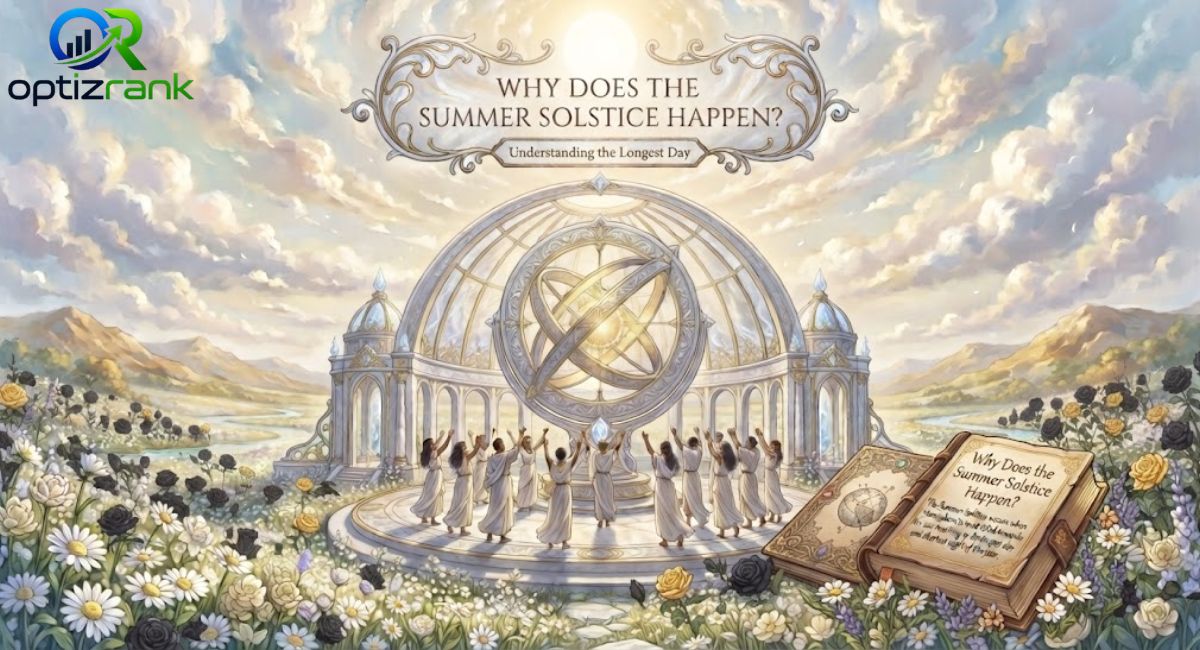
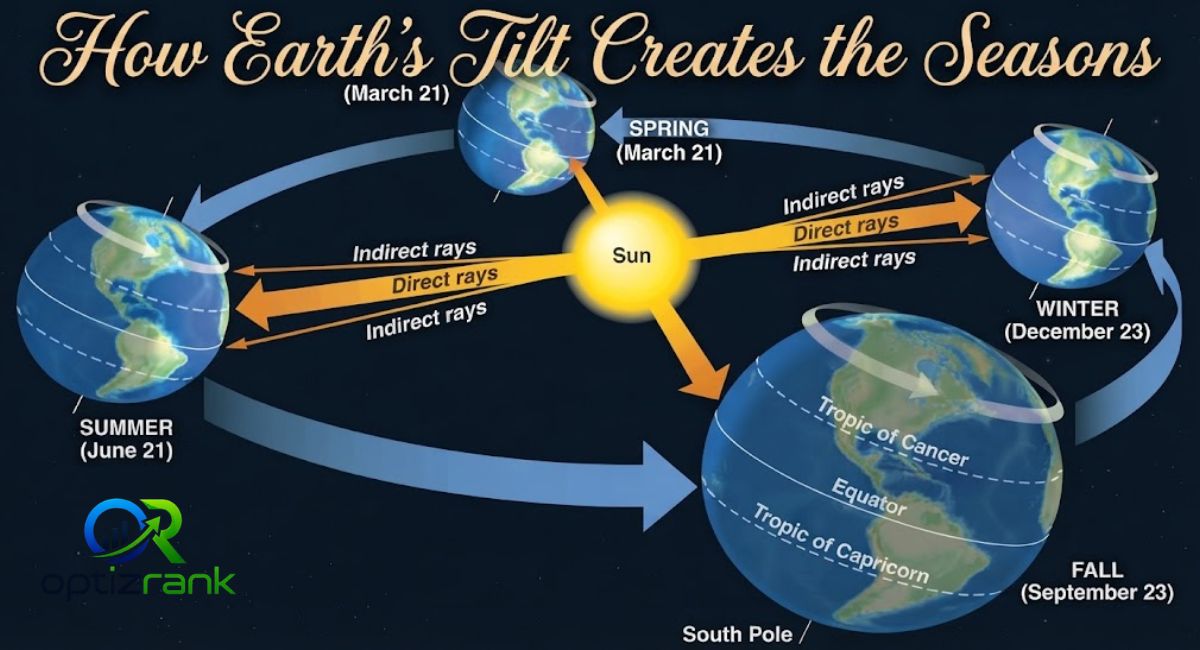
Here’s the key: Earth does not sit upright as it travels around the Sun. Its rotational axis tilts about 23.5 degrees. During June, that tilt points the Northern Hemisphere toward the Sun. The result is stronger sunlight and longer daylight across much of the north.
This tilt also explains why the seasons reverse between hemispheres. While North America enjoys summer, places such as Australia experience winter. The winter solstice arrives in December when the Southern Hemisphere tilts toward the Sun instead.
How Earth’s Tilt Creates the Seasons
Think of Earth as a slightly tilted spinning globe traveling around a lamp. Different parts receive different amounts of direct light as the globe moves. That changing sunlight creates the weather patterns associated with the seasons, although daily weather remains far more complicated.
The tilt changes sunlight angle and daylight duration rather than simply changing Earth’s distance from the Sun. In fact, Earth reaches perihelion in January and aphelion in July, so Northern Hemisphere summer occurs while Earth is farther from the Sun. (US Naval Observatory)
Why Is the Summer Solstice the Longest Day of the Year?
The summer solstice in 2026 gives the Northern Hemisphere its longest daylight period. Earth’s northward tilt allows the Sun to travel along a longer apparent path across the daytime sky. Areas farther north experience an even stronger effect. (Time and Date)
This doesn’t mean the Sun produces more energy because of the solstice itself. Instead, sunlight reaches northern locations for more hours. Within the Arctic Circle, some places experience the midnight Sun, where the Sun remains above the horizon throughout the night. (Time and Date)
Does the Summer Solstice Have the Earliest Sunrise and Latest Sunset?
Interestingly, the longest day doesn’t usually contain the year’s earliest sunrise and latest sunset. Those events normally happen several days away from the solstice because of Earth’s rotation, orbit, and the equation of time. (Time and Date)
For example, Harrisburg, Pennsylvania, has its earliest June sunrise around June 13 or 14. Its latest sunset arrives around June 27 or 28. The solstice sits between those two points. (Time and Date)
Summer Solstice vs Equinox: What’s the Difference?
A solstice and an equinox both mark important points in Earth’s yearly journey. The solstice produces the longest or shortest daylight period. An equinox occurs when the Sun crosses the celestial equator, bringing day and night closer to equal length around much of Earth.
The difference becomes easier to remember this way: solstice means maximum or minimum daylight, while equinox represents a seasonal midpoint in sunlight. The March and September equinoxes help mark spring and fall in the Northern Hemisphere.
| Event | Northern Hemisphere | Main Daylight Feature |
| March Equinox | Spring begins | Day and night approach equality |
| June Solstice | Summer begins | Longest daylight |
| September Equinox | Fall begins | Day and night approach equality |
| December Solstice | Winter begins | Shortest daylight |
Solstice vs Equinox at a Glance
The two events also differ in the Sun’s apparent position. At the June solstice, the Sun reaches its northernmost point above the Tropic of Cancer. At an equinox, the Sun crosses the celestial equator. These movements create the familiar seasonal rhythm. (Time and Date)
Summer Solstice Dates for the Next 10 Years
The summer solstice date doesn’t remain fixed forever. It can occur on June 20, June 21, or, rarely, June 22 in UTC. Calendar years and Earth’s actual orbital cycle don’t match perfectly, which causes the timing to shift. (Time and Date)
| Year | June Solstice Date | UTC Time |
| 2026 | June 21 | 08:24 |
| 2027 | June 21 | 14:10 |
| 2028 | June 20 | 20:02 |
| 2029 | June 21 | 01:48 |
| 2030 | June 21 | 07:31 |
| 2031 | June 21 | 13:17 |
| 2032 | June 20 | 19:08 |
| 2033 | June 21 | 01:01 |
| 2034 | June 21 | 06:44 |
| 2035 | June 21 | 12:33 |
These times are listed in UTC, so the local calendar date can differ by location. The U.S. Naval Observatory provides astronomical season calculations, while published astronomical tables provide the corresponding yearly solstice times. (Time and Date)
Why Does the Summer Solstice Date Change?
Earth takes about 365.2422 days to complete its seasonal cycle rather than exactly 365 days. The extra fraction gradually shifts astronomical events on the calendar. Leap years then help realign our calendar with Earth’s orbit. (Time and Date)
That is why 2028 and 2032 show a June 20 solstice in UTC. The shift isn’t an error. It’s simply the calendar keeping pace with an orbit that refuses to fit neatly into whole days.
Summer Solstice Traditions and Celebrations Around the World
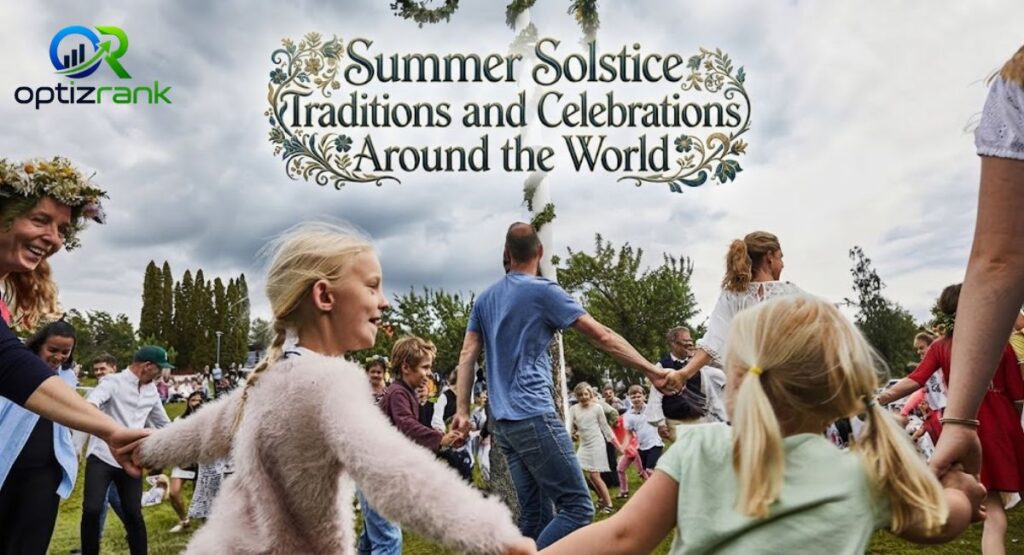
Long before modern calendars, people watched the Sun carefully. Agricultural communities depended on seasonal sunlight, so the solstice became a meaningful marker. Across Europe and elsewhere, celebrations developed around summer solstice traditions, fire, flowers, food, music, and community gatherings.
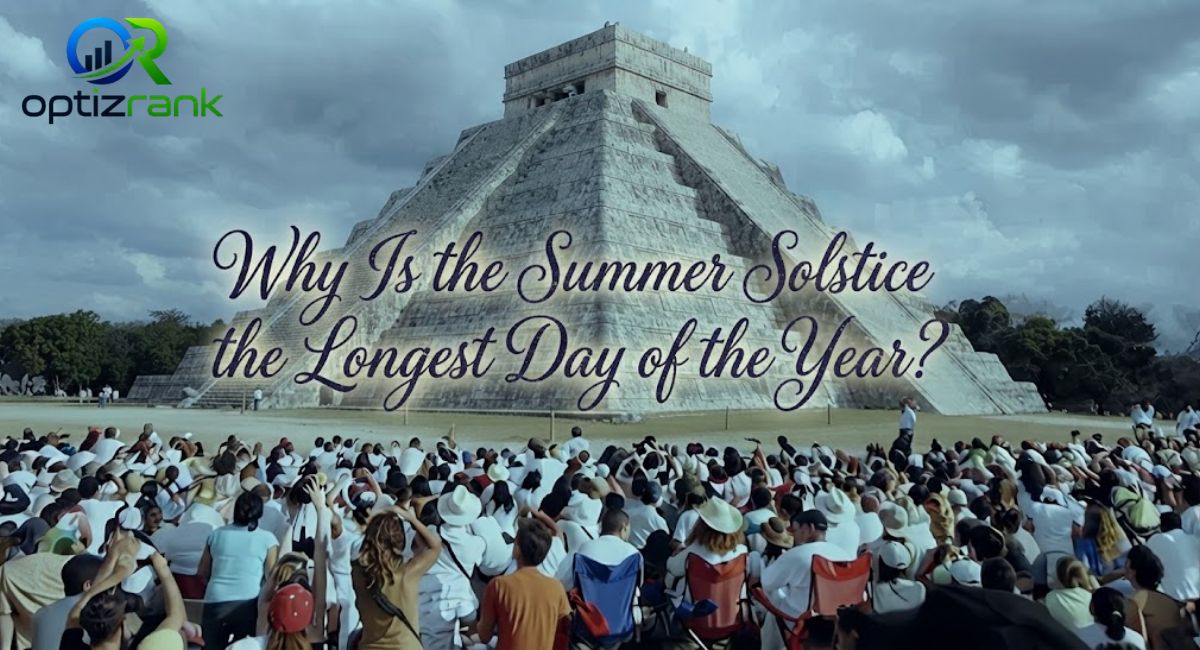
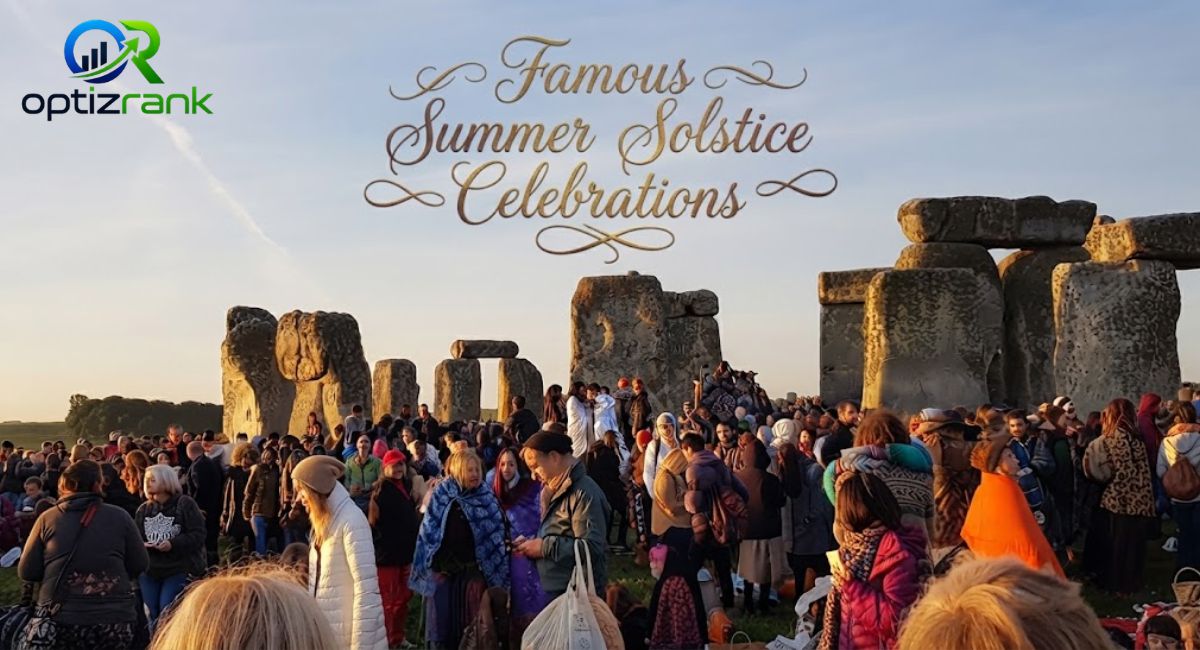
Stonehenge is one of the most famous examples. Its design has strong solar alignments, and modern visitors gather there around the solstice. However, modern celebrations shouldn’t automatically be treated as exact recreations of ancient rituals. (Time and Date)
Famous Summer Solstice Celebrations
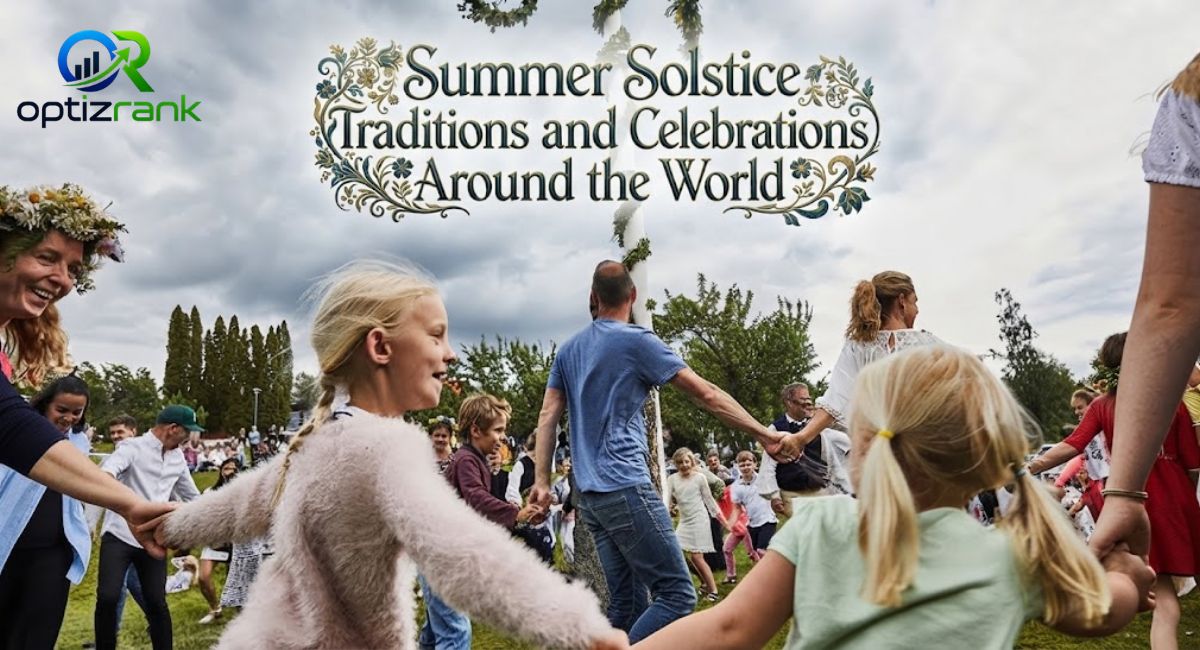
Midsummer celebrations remain especially popular in northern Europe. Sweden and other Scandinavian countries connect the season with flowers, outdoor meals, dancing, and traditional gatherings. Elsewhere, bonfires and sunrise events create their own distinctive interpretations of the longest days.
In the United States, celebrations are often less formal. People may attend astronomy events, visit parks, watch sunrise, host outdoor meals, or simply enjoy the extra daylight. The modern version can be wonderfully simple.
Interesting Summer Solstice Facts
The summer solstice 2026 is packed with fascinating details. The Sun reaches its northernmost apparent position during the June solstice. The point directly beneath the Sun lies along the Tropic of Cancer, which sits roughly 23.5 degrees north of the equator. (Time and Date)
Another surprise involves the weather. The solstice doesn’t predict a winter weather forecast, extended winter forecast, or long-range weather forecast. It also cannot tell you the winter storm forecast, winter weather predictions, seasonal weather outlook, or snowfall forecast months ahead. Those require atmospheric and climate analysis.
| Fact | What It Means |
| Longest daylight | Northern Hemisphere receives its maximum annual daylight |
| Tropic of Cancer | Sun appears directly overhead there at local solar noon |
| Midnight Sun | Some Arctic locations have continuous daylight |
| Opposite season | Southern Hemisphere begins astronomical winter |
| Calendar shift | Solstice dates vary because orbital timing doesn’t equal 365 days |
10 Quick Summer Solstice Facts
The June solstice happens at one exact instant worldwide. It can fall on different calendar dates depending on your time zone. It also doesn’t guarantee the year’s hottest day. Heat often peaks later because land and oceans need time to warm.
The event doesn’t create a cold weather forecast, winter climate outlook, or prediction of freezing temperatures. Likewise, it doesn’t determine whether the coming winter season will become a harsh winter, produce a cold snap, or bring major winter storms.
Common Myths and Misconceptions
One common myth says the solstice always occurs on June 21. That’s usually true for the United States, but the astronomical event can occur on June 20 or June 21 depending on the year and location. Rare June 22 solstices also occur in the long-term calendar. (Time and Date)
Another myth connects the solstice with the hottest weather. That connection sounds logical, yet it misses seasonal heat storage. Oceans, soil, buildings, and vegetation continue absorbing energy after the solstice, so the warmest period often arrives later.
Does the Solstice Predict Winter Weather?
No. The winter weather forecast USA readers see months later comes from atmospheric models and observed climate patterns. A snow forecast, cold outbreak, freezing rain, or heavy snowfall cannot be reliably predicted simply because the summer solstice occurred.
That distinction matters when readers encounter claims about a significant cold snap, pronounced cold spell, frequent snowstorms, or freezing precipitation supposedly being caused by the solstice. Those claims confuse astronomy with weather prediction.
How Can You Celebrate the Summer Solstice?
You don’t need an elaborate ceremony to enjoy the longest day. Wake early and watch sunrise. Plan a picnic. Take a nature walk. Stay outside for dinner. You could also photograph the changing light and compare it with photos from another season.
Families can make the day memorable with simple outdoor activities. A sunrise breakfast, garden visit, evening game, or backyard gathering can turn an ordinary Sunday into a small seasonal tradition. The best celebration is one that feels meaningful to you.
Simple Summer Solstice Ideas for Families
Try a sunset picnic, a nature scavenger hunt, or an evening walk. If children enjoy science, explain Earth’s tilt with a flashlight and a ball. That tiny demonstration turns an abstract astronomy lesson into something they can actually see.
You can also connect the event with a seasonal journal. Write down what you noticed about the sky, temperature, plants, and daylight. Later, those notes become a personal record of the changing seasons.
Frequently Asked Questions
What day is the summer solstice in 2026?
The summer solstice in 2026 occurs on Sunday, June 21. Its exact astronomical moment is 08:24 UTC. In New York, the event occurs at 4:24 a.m. EDT. (US Naval Observatory)
What time is the summer solstice in 2026?
In the continental United States, the moment occurs at 4:24 a.m. Eastern, 3:24 a.m. Central, 2:24 a.m. Mountain, and 1:24 a.m. Pacific time. (Time and Date)
Is June 20 or June 21 the first day of summer?
Astronomically, the Northern Hemisphere’s summer begins at the June solstice. In 2026, that falls on June 21. Meteorologists use June 1 as the start of meteorological summer, which is a different system.
How long is the longest day of 2026?
There is no single daylight duration for the entire United States. Latitude makes the difference. Northern locations receive substantially more daylight around the solstice than locations farther south. (Time and Date)
Why is the summer solstice the longest day?
Earth’s axial tilt points the Northern Hemisphere toward the Sun in June. That orientation creates longer daylight and a higher apparent Sun path across northern skies. The effect becomes stronger as you travel farther north.
Is the summer solstice the hottest day of summer?
No. The solstice marks maximum daylight, not maximum temperature. Weather conditions respond to many factors, including land, ocean, humidity, clouds, and atmospheric circulation. That is why peak summer heat often arrives weeks later.
Does the summer solstice happen at the same time everywhere?
Yes, the astronomical event occurs at one global instant. However, local clocks show different times because Earth uses multiple time zones. That difference can even place the event on different calendar dates.
What happens during the summer solstice?
The Sun reaches its northernmost apparent position in the sky. The Northern Hemisphere experiences its greatest annual daylight. Afterward, daylight slowly begins shortening even though summer weather generally continues for weeks. (Time and Date)
What is the difference between summer solstice and midsummer?
The solstice is a precise astronomical event. Midsummer is a broader cultural term that can refer to celebrations around the middle of summer. Different countries and traditions use the word in different ways.
When are the next summer solstices?
The next decade includes June 21 solstices in most years, with June 20 occurring in UTC during 2028 and 2032. The exact local date depends on your time zone. (Time and Date)
Final Thoughts
The summer solstice in 2026 offers more than the longest day of the year. It gives us a clear glimpse into how Earth’s tilt, orbit, sunlight, and seasons work together. On June 21, take a moment to notice the extra light. It’s astronomy happening above your own backyard.
And remember, the solstice doesn’t forecast seasonal snowfall, snow accumulation, winter precipitation, winter weather patterns, or storm systems. It also doesn’t determine a winter outlook, temperature forecast, or expected snowfall. Those belong to weather science, not astronomy.
A long-range winter forecast, winter forecast by state, winter storm outlook, extended seasonal forecast, weather prediction, or atmospheric pattern analysis may discuss future conditions. Such forecasts can explore Arctic air, icy conditions, a winter blast, extreme cold, freezing conditions, snowfall totals, winter precipitation, and other risks. Yet the summer solstice itself tells us none of those things.
The same applies to Winter 2025, Winter 2026, Winter 2025–2026, December holidays, September weather, Fall weather forecast, January weather, and February weather. Those topics involve different seasonal windows and forecasting methods. The solstice simply marks a fascinating astronomical turning point.
Even terms such as Cold Snap, Cold Outbreak, Freezing Rain, Snowfall, Precipitation, Temperature, Climate, Seasonal Forecast, Weather Prediction, Atmospheric Pattern, Arctic Air, Mountain Snowfall, Winter Storm, Rain-Snow Mix, and Holiday Weather belong to weather discussions rather than the astronomical definition of June’s solstice.
For now, the message is wonderfully simple: summer is arriving, daylight is at its annual peak, and the Sun has reached its northernmost apparent point. That’s reason enough to step outside and enjoy the light.
If you want to make someone’s morning special, check out our collection of 250+ Good Morning Wishes.

1 thought on “When Is the Summer Solstice in 2026? Ultimate Guide to Time, Traditions & Amazing Facts”